When it comes to modern logistics, one simple yet powerful tool has transformed the way goods are handled, stored, and transported—the roll container. You’ve probably seen them in supermarkets, warehouses, or delivery trucks. But what exactly makes them so popular, and why are they considered an essential part of supply chain operations?
A roll container is a wheeled cage-like unit made from durable metal, designed to carry, store, and move goods efficiently. It typically has three or four sides with a strong base and heavy-duty castor wheels, making it easy to transport items without the need for manual lifting. Think of it as a portable storage unit on wheels—simple but incredibly effective.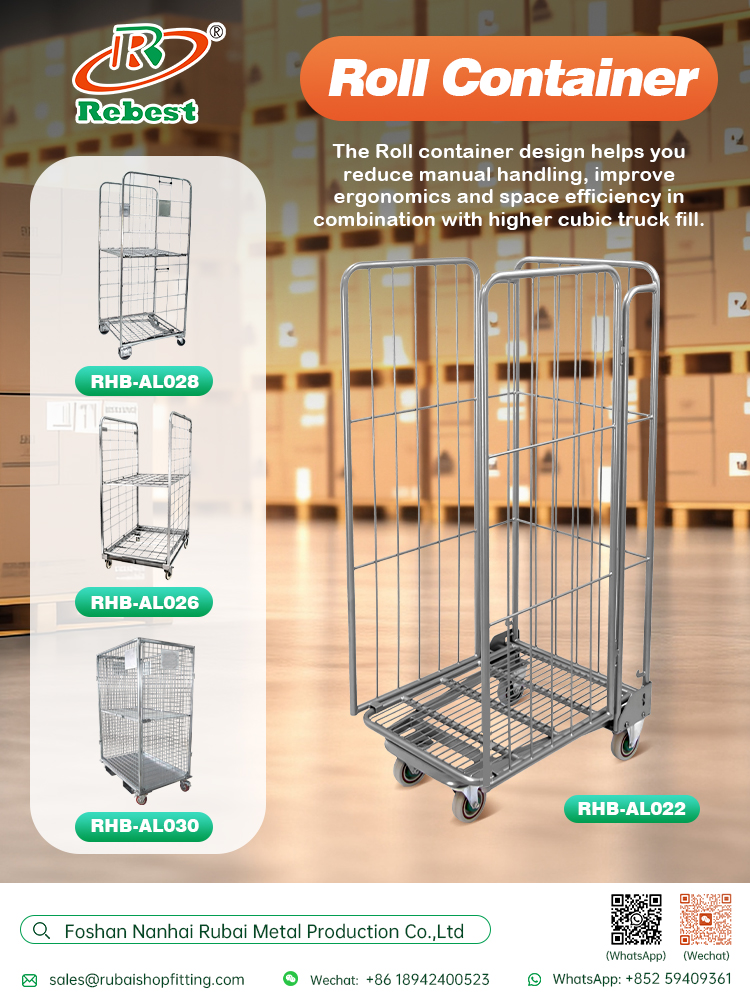
In today’s fast-paced supply chain, time and efficiency matter more than ever. Roll containers help businesses reduce manual handling, improve ergonomics for workers, and maximize truck space utilization. By using roll containers, companies save time, money, and effort while ensuring products are transported safely.
Not all roll containers are created equal. Depending on the industry and use case, different types of roll containers are available.
These are the most common type, featuring three or four mesh sides. They’re versatile and perfect for general storage and transport in retail and warehouses.
Equipped with lockable lids and finer mesh sides, these containers are used when valuable goods such as electronics, alcohol, or pharmaceuticals need secure transportation.
As the name suggests, these containers are oversized to handle bulky items or larger volumes, making them ideal for distribution centers.
Some industries require customized roll containers, such as insulated ones for food and pharmaceuticals or anti-static versions for electronics.
Most roll containers are built from high-grade steel to withstand heavy use. Some come with protective coatings to resist rust and wear.
High-quality castor wheels make it easy to move containers even when fully loaded, reducing strain on workers.
Modern roll containers often feature foldable designs, saving valuable warehouse space when not in use.
Depending on the model, roll containers can hold anywhere from 400 to 800 kilograms, making them suitable for both light and heavy loads.
Roll containers streamline the picking, packing, and distribution processes, saving time and reducing errors.
By minimizing the need for manual lifting, roll containers reduce workplace injuries and improve overall ergonomics.
They maximize cubic truck fill, ensuring more goods can be transported in fewer trips—cutting costs significantly.
Foldable models allow for compact storage when empty, freeing up warehouse space for other operations.
From fresh produce to packaged goods, roll containers are the backbone of efficient retail logistics.
Distribution centers depend on roll containers for handling bulk shipments and cross-docking.
Hospitals use them for transporting linens, medications, and medical supplies safely.
Hotels and catering companies use roll containers for moving food, beverages, and equipment.
When selecting a roll container, consider size, weight capacity, durability, and maneuverability.
Mesh containers are lightweight and allow visibility of goods, while solid panels offer extra protection.
Many suppliers offer custom designs, including branding, color coding, and specialized shelving.
Distribute weight evenly to avoid tipping and ensure safe transport.
Workers should be trained to push rather than pull containers and use proper braking when handling on slopes.
Regular inspections, wheel lubrication, and cleaning will extend the container’s lifespan.
Advanced roll containers now integrate RFID tags for tracking goods in real time.
Manufacturers are shifting towards recyclable and eco-friendly materials to reduce environmental impact.
In combination with automated guided vehicles (AGVs), roll containers are becoming a key part of warehouse automation.
Roll containers may look simple, but they play a critical role in the supply chain. From enhancing efficiency to ensuring worker safety and reducing costs, these mobile storage units are indispensable across industries. As technology evolves, roll containers will only become smarter, greener, and more efficient.


